Learn to see before you learn to felt – needle felting tip
When a sculpture doesn’t look quite right, it’s easy to assume the problem is technical. But it’s often an observation issue. Before you can create a believable animal, you need to be able to really see it. That means looking beyond the obvious and studying the proportions, shapes, and relationships that make that animal unique.
Instead of immediately grabbing for wool and needles, spend a few minutes studying reference photos. Where does the widest part of the body sit? How long is the muzzle compared to the head? Is the back straight, curved, or sloping? What makes a fox look like a fox and not a dog? When you observe carefully, your felting decisions become informed in an actionable way.
Strong observation skills improve every aspect of your work, from structure and proportions to color and expression. The good news is that this is not a skill that requires natural talent. It is something you can gain by practicing. The more time you spend learning to see, the easier it becomes to create animals that feel believable, lifelike, and full of character.
If you’d like to learn which questions I try to answer when looking at reference images, watch my How to design realistic needle felted animals video.
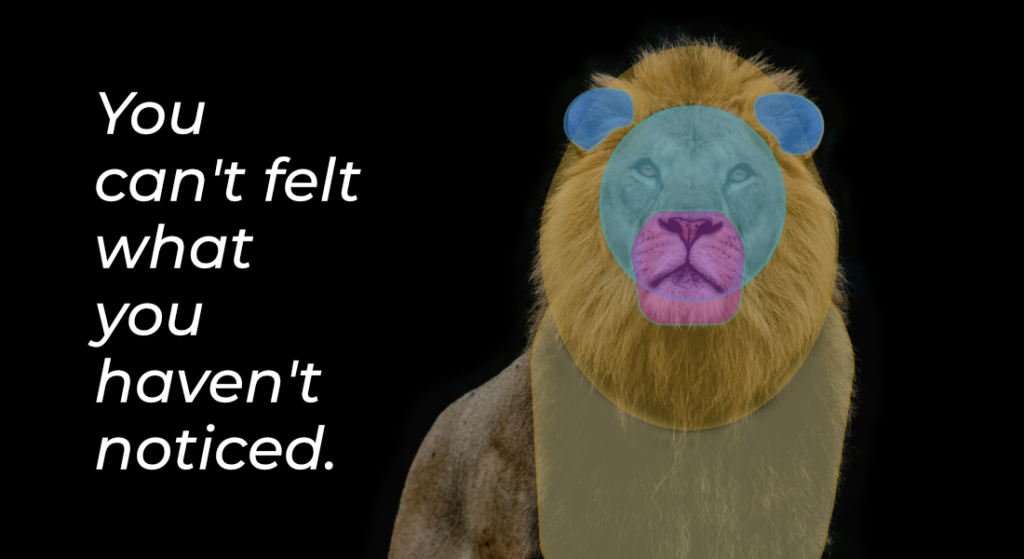
The photo above of a lion standing on a rock with a black background was taken by the following photographer:
Photo by Alihan Caglar on Unsplash
Note: I added the color overlays on the photo to emphasize the shapes that make up the lion’s head.