Make informed purchases – needle felting tip
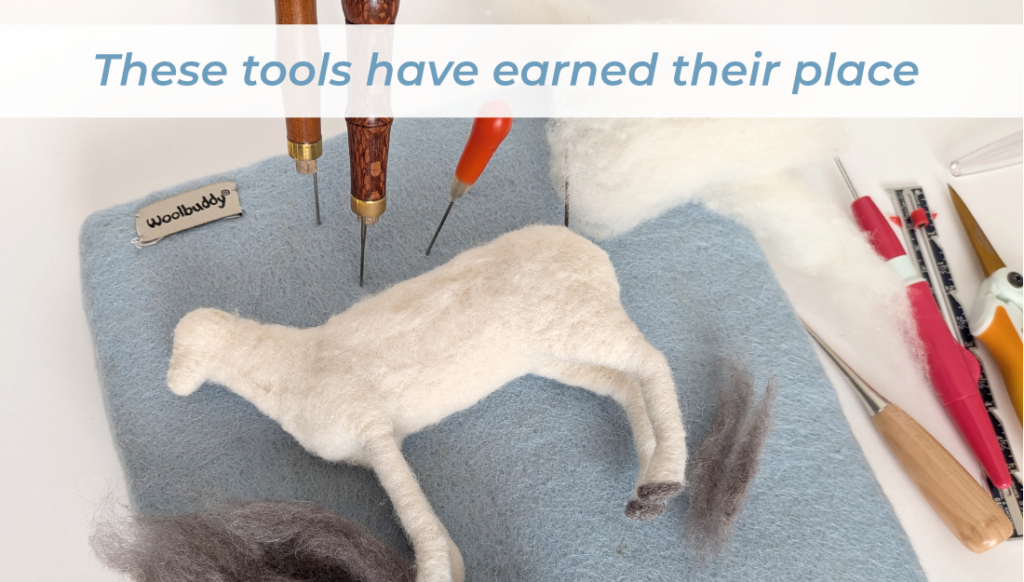
Buying needle felting supplies may seem like a quick way to improve your work. But only if you buy the right supplies. Before adding a new tool or material to your cart, ask yourself a few simple questions: Will I use it regularly? Does it solve a problem I’m actually having? Will it make the felting process easier or more enjoyable? Taking a few minutes to answer these questions can save you money and help you build a collection of tools you’ll reach for again and again.
I have included Amazon affiliate links for some of the items below. This means I may earn a small commission (at no extra cost to you) if you click through and make a purchase.
My favorite felting mat
One tool I use on almost every project is a Woolbuddy Felting Mat. A good felting mat provides a stable surface that makes your felting process comfortable and enjoyable. I like the sound the needles make on a wool mat. I’ve always found it relaxing versus the sound of felting on foam or brush mats.
Woolbuddy mats are thick enough to protect your work surface without feeling bulky or heavy. They don’t leave chunks of material on your felts like foam mats can.
For me, these felting mats hold up longer than any others I’ve tried. Rather than replacing cheap mats over and over, I prefer investing in quality tools that become reliable parts of my workspace. Plus, Woolbuddy Mats come in two sizes and a variety of colors! If you’re looking for a felting mat, this is the one I recommend. It has proven to be a dependable part of my own needle felting process for many years.
A few workhorse animal felting tools
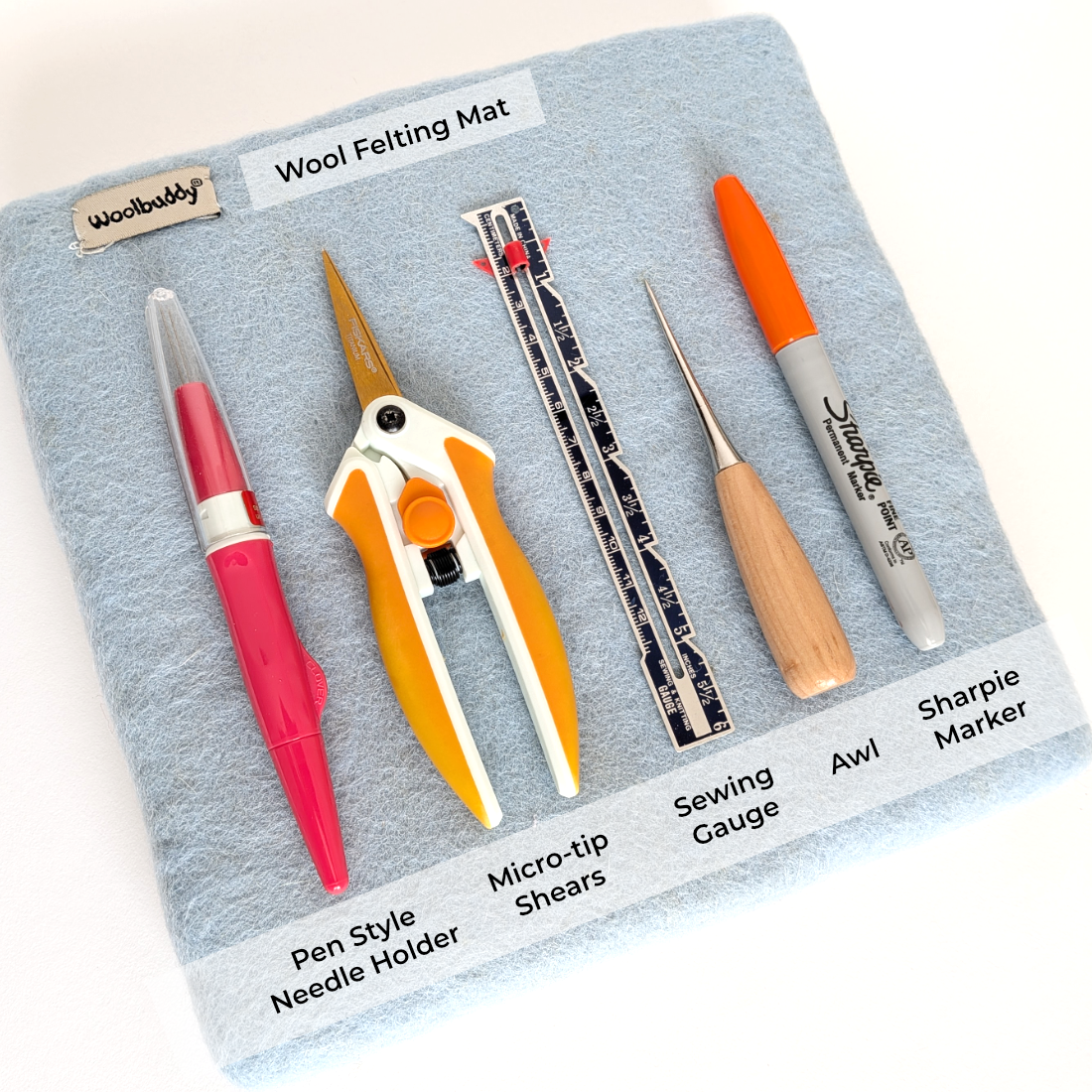
I have a set of tools that are always on my felting table and packed in my travel kit. I rely on these because they work and hold up well over time.
- Clover Pen Style Needle Holder – It will hold 3 needles but I load it with 2. I love using it to create straight lines, firm up a shape, or smooth surfaces. The plastic safety sleeve and cap make it safer to use and store. I’ve had mine for five years and it still works as well as the day I bought it. I just replace the needles when I you break one.
- Fiskars Micro-Tip Easy Action Shears – These are my go-to scissors. They’re easy to use and amazing for trimming tight spaces. They even cut through firmly felted animal bodies. I only use mine for fiber. This keeps them nice and sharp for a very long time.
- Dritz Sewing Gauge – I love the slider feature on this tool! Yes, I could pull out a ruler and measure. But then you have to remember numbers. This allows you to quickly size and compare areas accurately without conversions or math.
- Awl With Wood Handle – A good strong awl allows you to poke holes, reposition or fluff top coat, and much more. This one is great for creating wide holes to receive the wires on glass eyes or a wired limb when gluing them in place.
- Sharpie Fine Point Marker – I use these alcohol markers on wire armatures to indicate where to bend the wires. They are also wonderful for outlining areas of padding or color on core wool.
Creative takeaway
As your skills grow, you’ll discover that the best purchases aren’t always the newest or most exciting—they’re the ones that support the way you like to work. Thoughtful purchases help you spend less time collecting supplies and more time creating projects you love.