Work from general to specific – needle felting tip
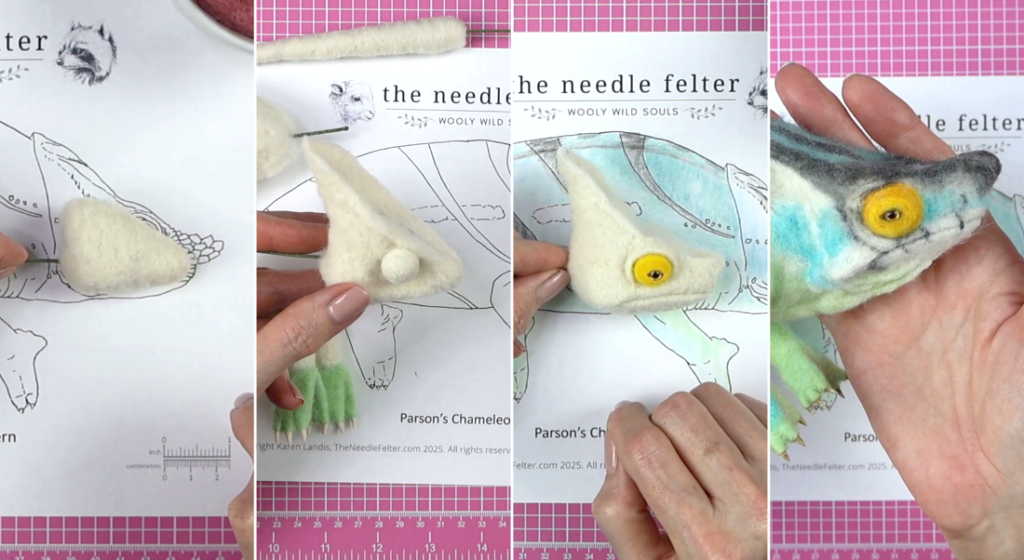
One of the most common ways a piece starts to feel “off” is when details are added too early. It’s tempting to jump into eyes, markings, or small features. But without a solid foundation underneath, those details have nothing to sit on. That’s when proportions drift, shapes become harder to correct, and your top coat feels like it’s disappearing into the core wool.
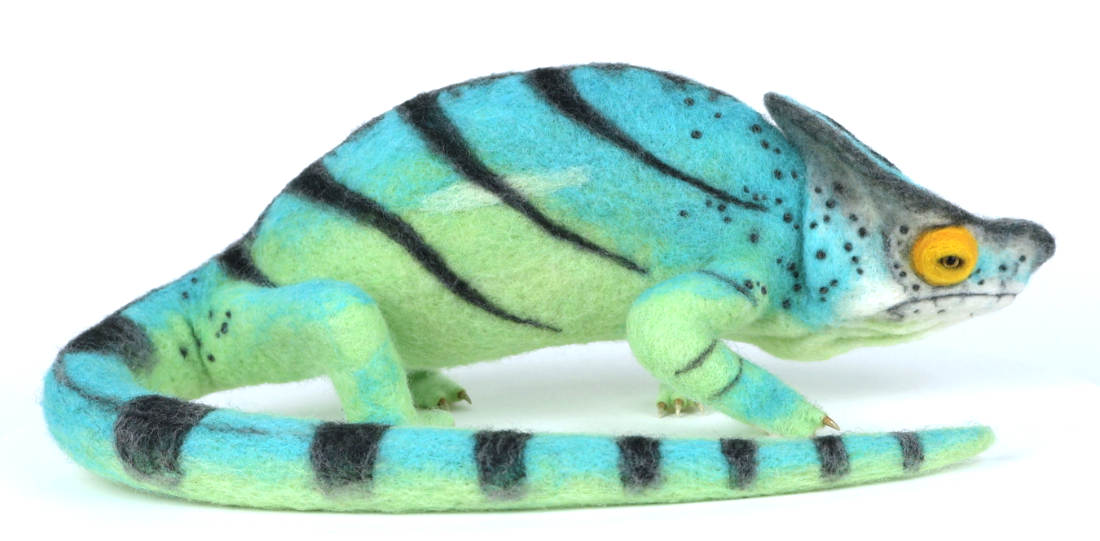
Instead, focus on building the broad forms first. Establish the overall size, major shapes, and proportions before refining anything. This is how I approached the Parson’s Chameleon head shown above.
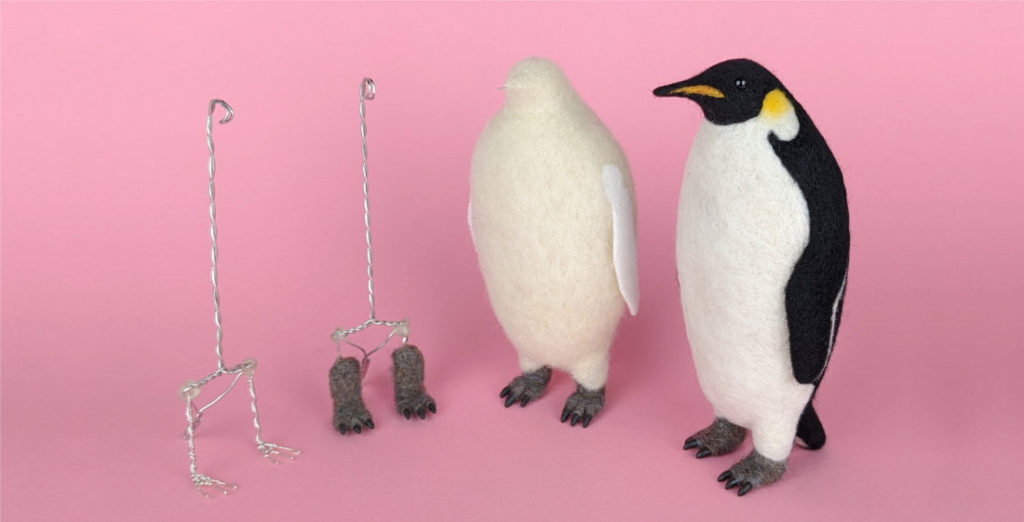
Think of it as felting the structure of your animal sculpture: the body’s mass, the placement of forms like the snout or limbs, the angle of the head and neck. Once those are in place, you can gradually move into refinements and surface detail with more control.
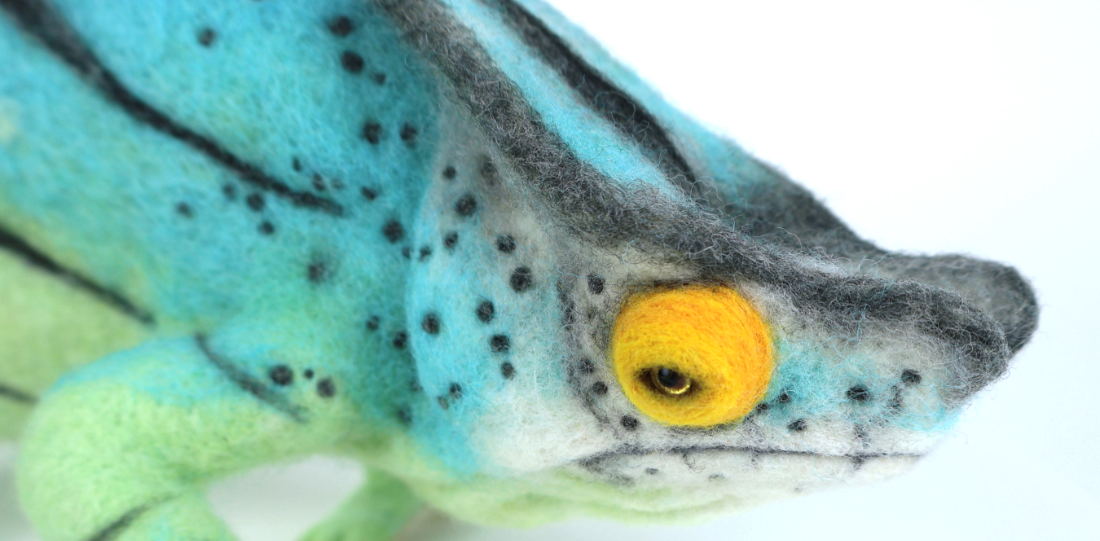
For reference, here’s the finished chameleon head. It was a commission and the customer requested some adjustments to the details. They were much easier to make given that the underlying structure didn’t need alterations.
Working this way keeps your piece flexible when it matters most. You can adjust proportions, shift forms, and correct mistakes early—before they’re locked in. Work from general to specific to help you create animals that feel balanced, look intentional, and are easier to finish without losing the joy of needle felting.